
"Love" is one of the most-searched words in the Bible, and for good reason. It sits at the very center of who God is and what he asks of us. But the Bible's vision of love is bigger and sturdier than a feeling. It begins with God himself, takes shape at the cross, and then becomes the mark of everyone who follows Jesus.
Rather than collect verses at random, it helps to read them in the order the gospel actually moves: God loved us first, Christ gave himself for us, we are called to love one another, and Scripture shows us what that love really looks like. Below are short, well-known passages for each step, with simple ways to slow down and pray over them.
God Loved Us First
Real love does not start with us. The apostle John roots everything first in God's own character, and then in the order of events: God moved toward us before we ever moved toward him.
"He that loveth not knoweth not God; for God is love." — 1 John 4:8 (KJV)
"We love him, because he first loved us." — 1 John 4:19 (KJV)
Notice the direction. We do not earn God's love and then receive it; we receive it and then learn to love in return. This is deeply freeing for anyone who feels they must perform their way into being acceptable. The starting point of the Christian life is not your effort but God's initiative. See also 1 John 4:7 and the whole flow of 1 John 4:7-19, which keeps returning to this theme.
Christ's Self-Giving Love
God's love is not an abstract idea; it has a face and a cost. The most famous verse in the Bible ties God's love directly to the gift of his Son.
"For God so loved the world, that he gave his only begotten Son, that whosoever believeth in him should not perish, but have everlasting life." — John 3:16 (KJV)
John writes that love and giving belong together: God "so loved" that "he gave." Love that costs nothing is only sentiment. Paul makes the same point even sharper by telling us when Christ gave himself.
"But God commendeth his love toward us, in that, while we were yet sinners, Christ died for us." — Romans 5:8 (KJV)
This is the heart of the good news. Christ did not wait for us to clean ourselves up; he died for us "while we were yet sinners." First John 4:10 says the same thing from another angle: love is "not that we loved God, but that he loved us, and sent his Son." If you ever doubt that you are loved, look here first, not at your feelings.
The Call to Love One Another
Because we have been loved like this, we are now sent to love. On the night before he died, Jesus gave his followers a defining command.
"A new commandment I give unto you, That ye love one another; as I have loved you, that ye also love one another." — John 13:34 (KJV)
What makes it "new" is the standard: "as I have loved you." The measure of our love is no longer merely how we wish to be treated, but how Christ has actually treated us. And Jesus says this love is meant to be visible and public.
"By this shall all men know that ye are my disciples, if ye have love one to another." — John 13:35 (KJV)
John echoes this in his letter: "if God so loved us, we ought also to love one another" (1 John 4:11). Our love for others is not an optional add-on to faith. It is the family resemblance, the sign that God's love has truly landed in us and is flowing back out.
What Real Love Looks Like
If love is a command, we need to know what it actually involves day to day. Paul gives the clearest portrait in 1 Corinthians 13, often called the "love chapter." In the King James Version the word is translated "charity," meaning self-giving love.
"Charity suffereth long, and is kind; charity envieth not; charity vaunteth not itself, is not puffed up," — 1 Corinthians 13:4 (KJV)
"Beareth all things, believeth all things, hopeth all things, endureth all things." — 1 Corinthians 13:7 (KJV)
This is love with its sleeves rolled up: patient, kind, slow to envy, willing to bear and endure. It is striking how practical it is. Paul does not describe a glowing emotion; he describes a way of treating people, especially when they are difficult. He ends by ranking love above even faith and hope.
"And now abideth faith, hope, charity, these three; but the greatest of these is charity." — 1 Corinthians 13:13 (KJV)
How to Meditate on These Verses
Reading these passages quickly can leave us informed but unchanged. Meditation simply means lingering over a verse until it moves from your head to your heart. Here is a gentle way to begin.
- Read slowly, then read again. Pick one verse, perhaps 1 John 4:19 or Romans 5:8. Read it aloud two or three times. Let one word stand out and stay with it.
- Ask three questions. What does this tell me about God? What does it tell me about myself? What is one thing I can do in response today?
- Turn the verse into a prayer. "Father, you loved me first; help me to rest in that before I try to do anything for you." Speaking Scripture back to God keeps meditation honest and relational.
- Carry one phrase with you. Choose a short line such as "God is love" and return to it during the day, while commuting, waiting, or working.
- Look for one person to love. Since this love is meant to flow outward, end by naming one person and one concrete, patient act from 1 Corinthians 13 you can show them this week.
If you use study tools, including any AI-assisted helper, treat them as servants of your reading, not substitutes for it. Such tools can suggest cross-references or background, but they can be wrong, and they cannot give you the Holy Spirit's understanding. Always test what you read against Scripture itself, and let the living God speak to you through his Word, his Spirit, and the fellowship of his people.
Taken together, these verses tell one story: love did not begin with us, it was proven at the cross, and it is now meant to flow through us to one another. Start where the Bible starts, with the God who "first loved us," and let that love reshape how you treat everyone you meet.
Carry deeper Bible study in your pocket
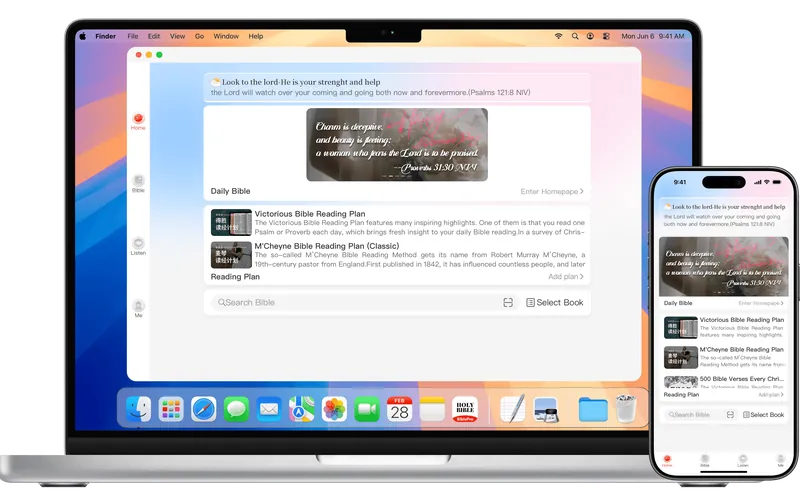
BiblePro brings AI-powered search, parallel translations, original-language tools and reading plans together — free to download, so you can study deeply anytime, anywhere.