
If you have spent any time around church, you have heard the word grace. We sing about it, name our children after it, and say it before meals. Yet many sincere believers would struggle to explain what it actually means. Grace is not merely a religious mood or a polite word for being nice. It is one of the deepest truths in all of Scripture, and getting it right changes everything about how you relate to God.
At its simplest, grace is God's free, unmerited favor toward people who do not deserve it. It is a gift you cannot earn, repay, or lose by trying too hard. Let's look at what the Bible actually says, clear up some common confusion, and see how you can both receive grace and grow in it.
Grace Means Unearned Favor
The clearest definition of grace in the New Testament comes from Paul. He wants believers to understand that salvation is a gift, not a wage we collect for good behavior:
"For by grace are ye saved through faith; and that not of yourselves: it is the gift of God: Not of works, lest any man should boast." — Ephesians 2:8-9 (KJV)
Notice the careful logic. Salvation comes through faith, but the source is grace. It is a gift, not a transaction. And it is specifically "not of works" so that no one can boast. The moment we imagine we contributed something God owed us, we have stopped talking about grace and started talking about payment.
Paul says the same thing about being declared righteous before God:
"Being justified freely by his grace through the redemption that is in Christ Jesus:" — Romans 3:24 (KJV)
That little word "freely" is the heart of it. We are made right with God at no cost to us, because the cost was already paid by Jesus.
How Grace Differs From Mercy
People often use grace and mercy interchangeably, but they describe two sides of God's kindness, and the difference is worth keeping clear.
- Mercy is God not giving us the punishment our sin deserves. It withholds judgment. A guilty person who is pardoned has received mercy.
- Grace is God giving us the blessing we could never deserve. It bestows a gift. The same pardoned person, then welcomed home as a beloved child and seated at the table, has received grace.
A helpful way to remember it: mercy spares us from what we have earned, while grace gives us what we have not earned. The cross displays both at once. At Calvary, the penalty for sin was carried away (mercy), and in its place we were given righteousness, adoption, and eternal life (grace).
Grace Is Bigger Than Your Sin
One of the most encouraging truths in the Bible is that grace is never overwhelmed by our failures. Paul puts it boldly:
"Moreover the law entered, that the offence might abound. But where sin abounded, grace did much more abound:" — Romans 5:20 (KJV)
Wherever sin has dug a deep hole, grace digs deeper still. This is why no one is too far gone, too ashamed, or too repeatedly fallen to come to God. If your sin feels enormous, the gospel says God's grace toward you in Christ is greater.
The same comfort meets us in our weakness, not just our sin. When Paul begged God to remove a painful "thorn in the flesh," the answer was not relief but sustaining grace:
"And he said unto me, My grace is sufficient for thee: for my strength is made perfect in weakness." — 2 Corinthians 12:9 (KJV)
Grace is not only how we are saved; it is how we are carried through hardship we cannot fix on our own.
Why Grace Is Not a License to Sin
If salvation is free and grace outpaces sin, a fair question arises: does grace mean my behavior no longer matters? Can I sin all I want and just rely on grace to cover it? Paul anticipated exactly this objection and rejected it in the strongest terms:
"What shall we say then? Shall we continue in sin, that grace may abound? God forbid. How shall we, that are dead to sin, live any longer therein?" — Romans 6:1-2 (KJV)
Real grace does not leave us where it found us. It transforms us. Titus describes grace not as an excuse for sin but as a teacher that leads us into a new way of living:
"For the grace of God that bringeth salvation hath appeared to all men, Teaching us that, denying ungodliness and worldly lusts, we should live soberly, righteously, and godly, in this present world;" — Titus 2:11-12 (KJV)
Grace and obedience are not enemies. Grace is the soil in which obedience grows. When you truly grasp how undeserved God's love is, the natural response is not "I'll take advantage of this," but "How could I keep living for the very sin that cost my Savior so much?"
How to Receive Grace and Grow in It
Grace is a gift, so it is received, not achieved. Here are some practical, biblical ways to open your hands to it.
Come humbly
God gives grace to those who stop trying to prove themselves and simply admit their need:
"But he giveth more grace. Wherefore he saith, God resisteth the proud, but giveth grace unto the humble." — James 4:6 (KJV)
The proud, self-sufficient heart finds grace strangely scarce, not because God withholds it, but because pride cannot receive a gift. Humility is the empty hand grace fills.
Stay near the means of grace
God ordinarily strengthens us through ordinary habits: reading and meditating on Scripture, honest prayer, gathering with other believers, the Lord's Supper, and worship. None of these earn grace, but they are the well where we keep coming to drink. Growth in grace is rarely dramatic; it is the steady result of staying close to where God promises to meet us.
Keep your eyes on Christ, not your performance
We grow in grace the same way we entered it: by trusting Jesus rather than our own track record. On the days you fail, grace is still sufficient. On the days you succeed, grace is still the reason. Learning to rest there, secure in God's free favor, is the slow, beautiful work of a lifetime.
As you study, let your tools serve you without ever replacing the real thing. Commentaries, study notes, and other study helpers can point you to a verse or explain a word, but they are fallible assistants, not authorities. Test everything against Scripture itself, and lean on the Holy Spirit and the fellowship of the church to lead you into the truth. Grace is not finally a concept to master; it is a Person to know, and a gift to keep receiving with open, grateful hands.
Carry deeper Bible study in your pocket
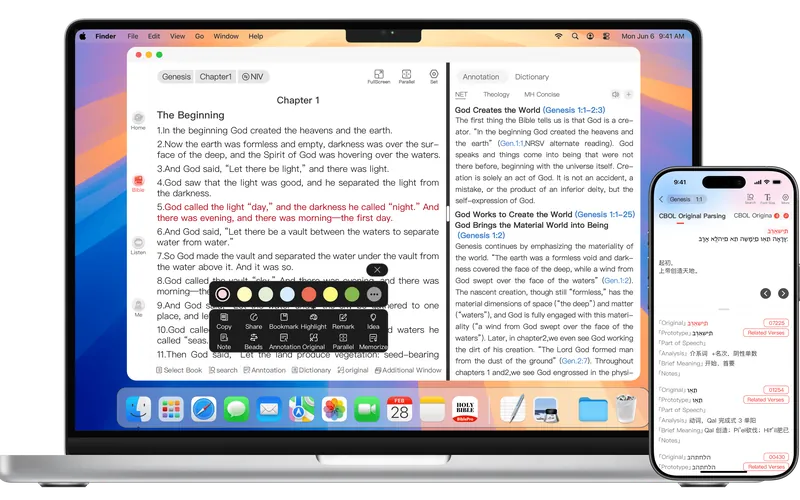
BiblePro brings AI-powered search, parallel translations, original-language tools and reading plans together — free to download, so you can study deeply anytime, anywhere.