
The word "gospel" simply means good news. Not good advice, not a list of rules to keep, but news — an announcement of something that has already happened. The earliest Christians summarized this news in a few short lines, and the apostle Paul says he received it and "delivered" it as a matter of "first importance." If you have ever wondered what Christianity is actually about at its core, this is it.
The clearest way to grasp the gospel is to follow it in four movements. Each one builds on the last, like four notes that resolve into a single chord. As you read, I would encourage you to keep your Bible open beside you and check every claim against the text itself. The best news in the world deserves your careful examination, not your blind agreement.
First Movement: God
The gospel begins not with us but with God. He is the Creator of everything, including you, and He is holy — perfectly good, perfectly just, perfectly loving. Because He made us, He has the right to define what is good, and because He is good, His standard is not cruel or arbitrary. To understand the rest, we have to start here: the story is His before it is ours.
And the heart of who God is, the New Testament insists, is love:
"Beloved, let us love one another: for love is of God... He that loveth not knoweth not God; for God is love." — 1 John 4:7-8 (KJV)
Hold these two truths together: God is holy, and God is love. The gospel only makes sense when neither one is softened.
Second Movement: Our Sin
The second movement is harder to hear, but it is the part that makes the good news good. Every one of us has turned away from the God who made us. We have lived for ourselves, broken His commands, and fallen short of the goodness He designed us for. This is what the Bible calls sin, and Scripture is honest that it is universal:
"For all have sinned, and come short of the glory of God." — Romans 3:23 (KJV)
Notice the word "all." This is not a category for especially wicked people; it includes the religious and the moral, the kind neighbor and the quiet skeptic. And sin is not a small thing with small consequences. The same letter tells us plainly what it costs:
"For the wages of sin is death; but the gift of God is eternal life through Jesus Christ our Lord." — Romans 6:23 (KJV)
That single verse holds the whole gospel in tension. Sin earns a wage — death, a real separation from God. But notice the second half: there is also a gift. The verse turns on the word "but." Keep that word in mind, because the next movement is where the gift arrives.
Third Movement: Christ's Death and Resurrection
Here is where the news breaks in. God did not leave us in our sin, and He did not lower His standard to pretend the problem away. Instead, He sent His own Son, Jesus Christ, to take the wage we had earned. Jesus lived the life we failed to live and died the death we deserved to die, in our place. And the timing of this is the most staggering part:
"But God commendeth his love toward us, in that, while we were yet sinners, Christ died for us." — Romans 5:8 (KJV)
He did not wait for us to clean ourselves up first. He acted while we were still turned away. This is the precise content of the gospel Paul handed on, and it is worth quoting at length because it is so compact:
"For I delivered unto you first of all that which I also received, how that Christ died for our sins according to the scriptures; And that he was buried, and that he rose again the third day according to the scriptures." — 1 Corinthians 15:3-4 (KJV)
Why the resurrection matters
The cross is not the end of the story. On the third day Jesus rose bodily from the grave. The resurrection is God's public verdict that the payment was accepted and death itself has been defeated. Without it, the death of Jesus would be a tragedy; with it, the death of Jesus becomes a triumph. Paul lists eyewitnesses in the verses that follow (1 Corinthians 15:5-8) — this was a claim made in public, open to investigation, not whispered in secret.
Fourth Movement: Our Response of Faith
If the first three movements are true, then they ask something of you. The gift named in Romans 6:23 is real, but a gift has to be received. The Bible's word for receiving it is faith — trusting in what Christ has done rather than in what you have done. It is gloriously simple:
"That if thou shalt confess with thy mouth the Lord Jesus, and shalt believe in thine heart that God hath raised him from the dead, thou shalt be saved." — Romans 10:9 (KJV)
Two things go together here: an inward trust that God raised Jesus, and an outward confession that He is Lord. This is not merely agreeing that the facts are true; it is entrusting yourself to the One the facts are about.
And here is the relief at the heart of it all. You do not earn this. You cannot earn this. It comes to empty hands:
"For by grace are ye saved through faith; and that not of yourselves: it is the gift of God: Not of works, lest any man should boast." — Ephesians 2:8-9 (KJV)
Grace means a gift you did not deserve and could never repay. The door is open not because you have been good enough, but because Christ was.
Examine It for Yourself
I have quoted these verses rather than asking you to take my word for it, and I would urge you to go further — read the surrounding chapters, not just the single lines. Read Romans 3 through 6 slowly. Read 1 Corinthians 15 from beginning to end. Read the Gospel of John and watch how Jesus speaks and acts. The four movements are not a clever framework imposed on the Bible; they are simply what the Bible says, gathered in one place.
No study tool, commentary, or AI helper is itself the authority. The Scripture is. Test everything you read, including this article, against the text — and ask the God who is love to open your eyes as you do. If the gospel is true, it is the most important news you will ever weigh.
Carry deeper Bible study in your pocket
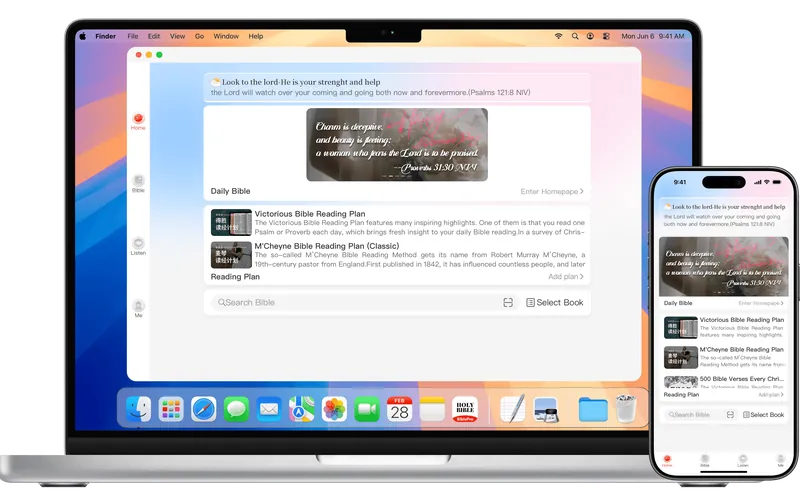
BiblePro brings AI-powered search, parallel translations, original-language tools and reading plans together — free to download, so you can study deeply anytime, anywhere.